
Bordeaux is a city that recycles its buildings with a rare sense of script. Many of its busiest spots today were not designed for what they became. A military barracks turned into an alternative ecosystem. A Nazi submarine base now projects digital art. A medieval church hosts art-house cinema. A Roman amphitheatre sits forgotten between apartment buildings. And a Gothic spire stands alone, planted next to its church. Here are five unusual spots to spot for sure, and above all, to read together: they all tell the same city, each in its own way.
Darwin Écosystème: the barracks turned alternative village
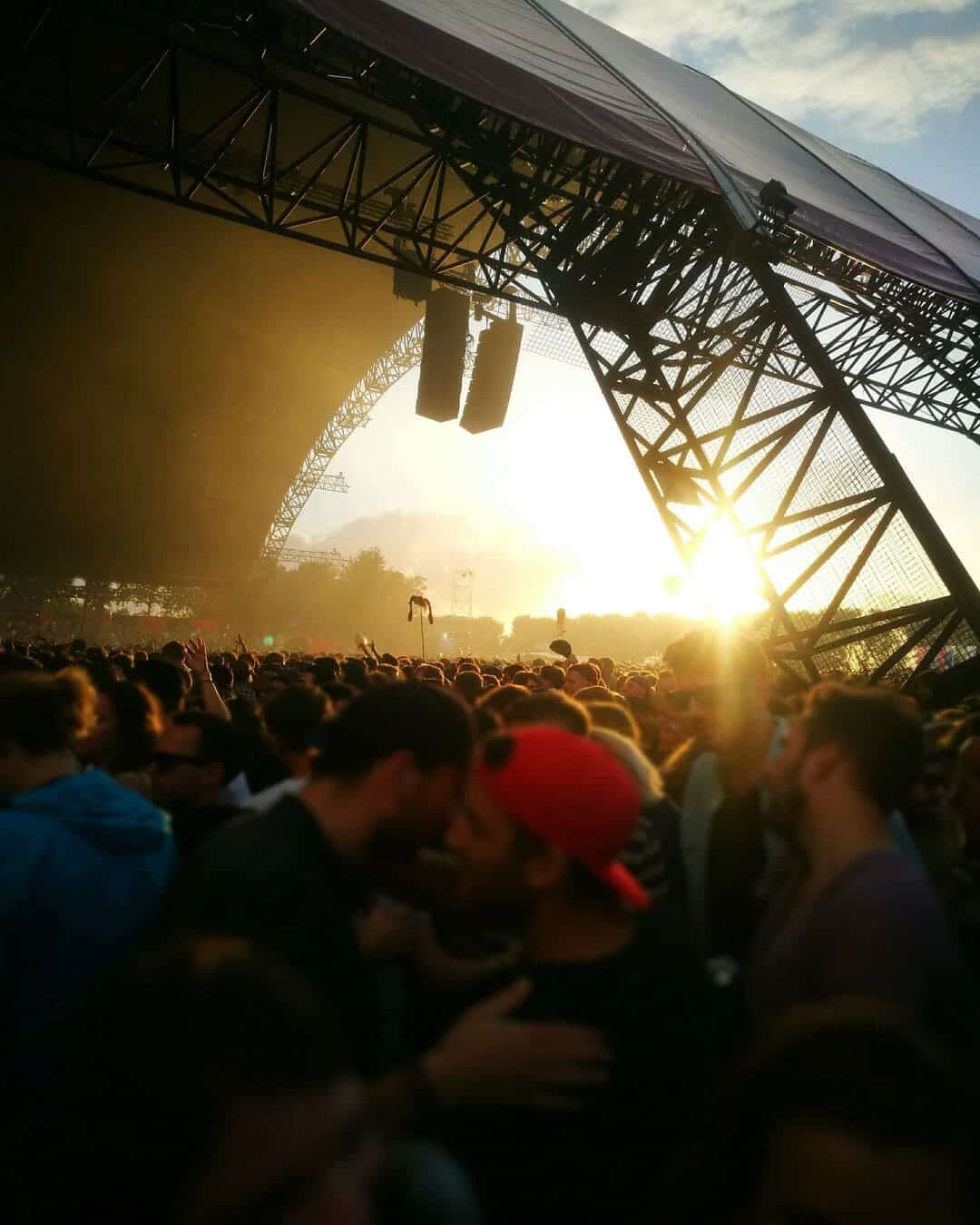
Right bank, at the end of the Niel barracks, you find a set of red-brick military buildings ringed with giant street art murals, skate ramps, vegetable gardens, containers recycled into offices. That is Darwin. Until 2005, the spot served as barracks for the 15th train regiment, a military area closed to civilians since 1875. In 2009, an atypical developer buys the site and turns it into an "ecosystem": coworking, organic restaurant, giant skate park, organic shop, urban farm, concert venue, homeless camp, engaged start-up incubator. All this coexists on 20,000 sqm, without ever fitting a clean administrative box. What was most rigid about the barracks (discipline, uniform, hierarchy) became its exact opposite. Unusual? Yes. Alive? Completely. Visit a spring Saturday afternoon, the place hums.
Bassins de Lumières: Nazi concrete turned giant screen
Another spectacular reconversion, 3 km from Darwin heading towards Bacalan. Bordeaux's submarine base was built between 1941 and 1943 by the Todt organisation, to shelter German and Italian submarines fighting the Battle of the Atlantic. 42,000 sqm of concrete, a 5.60 m thick roof designed to withstand carpet bombing, 11 cells 110 m long. A military architecture monster, impossible to destroy after the war, left abandoned for decades. In 2020, Culturespaces (the Atelier des Lumières people in Paris) sets up the world's largest digital art centre. Klimt, Van Gogh, Vermeer projected onto the raw walls, images reflecting on the black water of former docks, industrial-cathedral acoustics. The contrast is striking: you walk on the tracks of a war machine while a sunflower field comes alive 20 m tall.
Utopia: the medieval church turned temple of the 7th art
Back on the left bank, Place Camille-Jullian, Saint-Pierre neighbourhood. You push a small wooden door, buy your ticket, grab a drink at the bar. Looking up, you realise you are drinking under a 13th-century vault. This is the Utopia cinema, housed in the former Saint-Siméon church. The religious building, decommissioned at the Revolution, lived several lives before hitting cinema: naval school for underprivileged kids in 1833 (with a reconstituted frigate under the nave, you read that right), sardine cannery in 1863, bicycle shop, then garage with a car lift. Only in 1999 did the Utopia network rehabilitate the place to install five art-house screens without ever masking the original architecture. Stained glass, columns, arches, exposed stone walls: the sacred decor stayed in place.
Palais Gallien: the Roman amphitheatre forgotten between apartment buildings
Head to the residential neighbourhood between Fondaudège and Jardin Public. You turn onto Rue du Docteur-Albert-Barraud, walk past ordinary Haussmann buildings, and there, jammed between two facades, small-Roman-stone arches await, 22 m tall. This is the Palais Gallien, the only visible remnant of Gallo-Roman Bordeaux. It is not actually a palace but an amphitheatre built in the early 3rd century, under Severus. It could hold 20,000 spectators, more than the Grand Théâtre today. The name "Palais Gallien" is a medieval invention: a legend said Eleanor of Aquitaine met her lover there, and the people, not fooled but poetic, gave it the name of an even more legendary queen: Galliena. For centuries, the amphitheatre served as a stone quarry to build the rest of the city. Only a section of arcades remains, but it is right there. Total unusualness: an 1,800-year-old relic planted in an ordinary residential neighbourhood, like it was forgotten. Open for visits in summer, free part of the year.
Flèche Saint-Michel: the tower on its own (and its mummies)
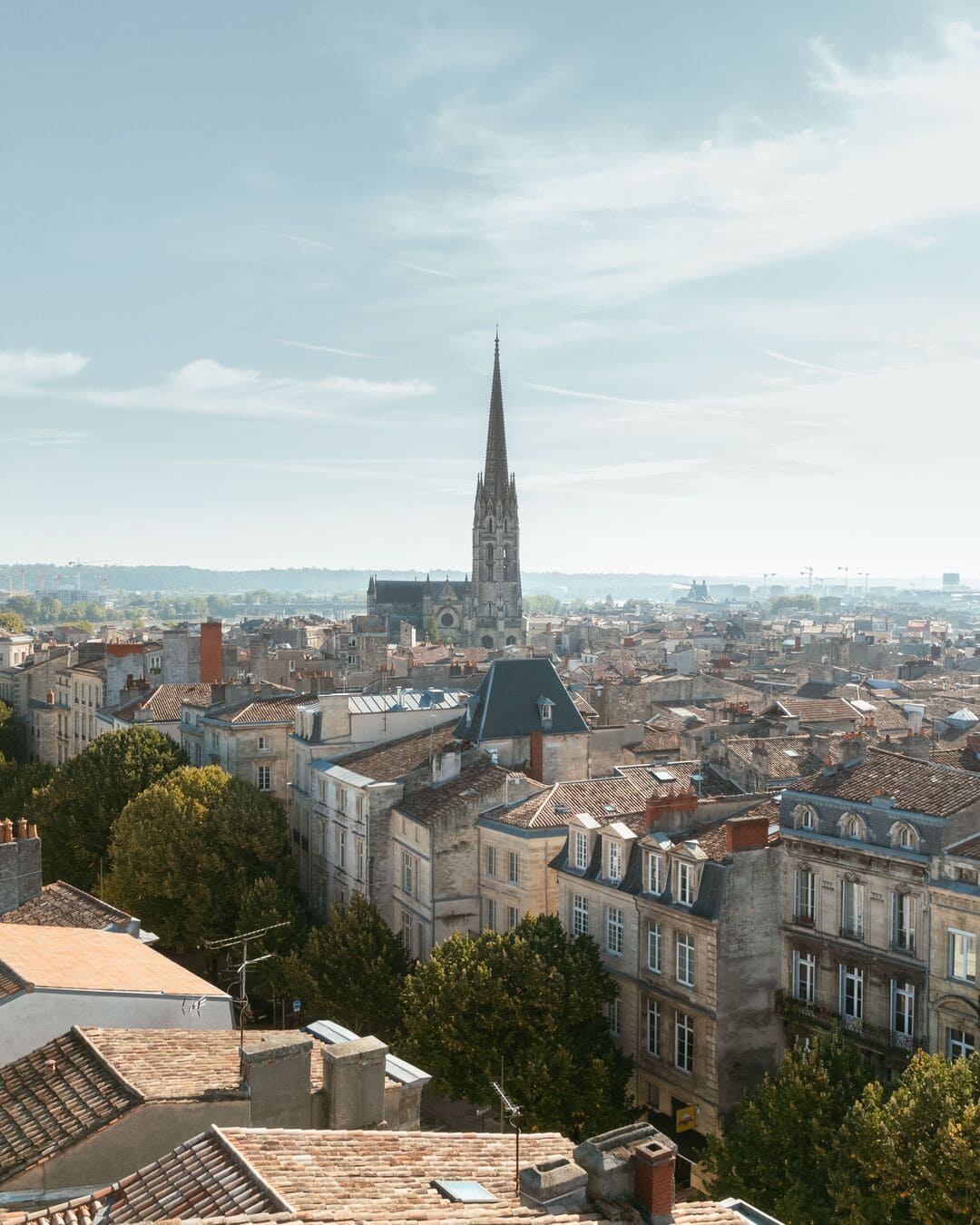
Last stop, Saint-Michel neighbourhood, heading down to the quays. Look up: a 114 m Gothic spire, the second tallest in France after Strasbourg cathedral. Except this spire, called simply "la Flèche" by locals, is not attached to the Saint-Michel basilica as you might expect: it is completely separate, standing next to it, independent. An isolated campanile tower, an extremely rare architectural phenomenon in northern Europe. Cause: the marly ground of the neighbourhood, too unstable to bear the spire's weight if attached to the nave. Another curiosity: the crypt beneath the tower long housed 70 mummies naturally dried by the former cemetery's properties and the ground, which prevented decomposition. They were visitable until 1979, then removed. The crypt has since reopened to the public, and you can climb the 194 steps to the terrace for a rare view of Saint-Michel, slate roofs and the Garonne. Full story of the tower and its mummies in our dedicated article on the Flèche Saint-Michel. The tower and its neighbouring church also read very well from the Pont de Pierre at sunset, one of the best viewpoints in the city.
Going further
Five spots, one city, same obsession: take a building, use it differently, let the layers stack. Bordeaux does not raze, it piles. Probably what makes it so interesting to explore. To go further: our full Bordeaux off the beaten track guide, and for a first city tour, our pillar Discovering Bordeaux. Want to see them all in one weekend? Our Bordeaux in 2 days plan gives you a frame.