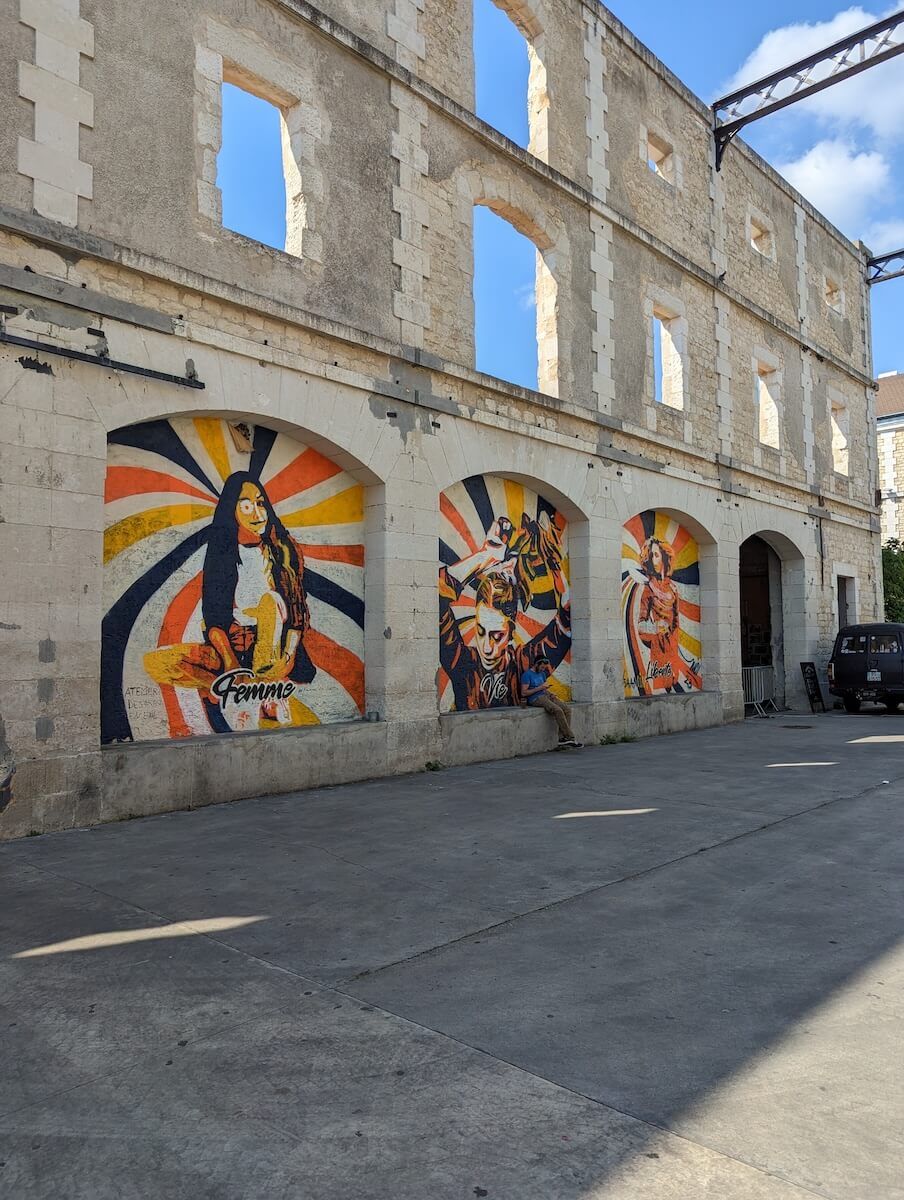

You cross the Pont de Pierre, walk along the quai des Queyries on the right bank, turn right at hangar 88, and step into another world. Late-19th-century red-brick buildings, wrapped in giant street-art murals, skaters coming out of a hangar, an organic grocery in the former mess halls, a vegetarian restaurant where the officers' mess used to be, a humanitarian camp next to a start-up incubator. Welcome to Darwin. Officially, it is a former military district. Unofficially, it is the most atypical place in Bordeaux, with no equivalent in France.
A barracks closed to civilians for 130 years
Before Darwin, there was the Niel barracks. Built from 1874 onwards on orders of Marshal Adolphe Niel, Minister of War under Napoleon III, it stretches over 20,000 square metres on the edge of the Garonne. It was named in his honour, occupied a strategic position facing the historic centre, and for more than a century housed the 15th Train Regiment, a logistics unit of the French Army. To Bordeaux residents, the site was entirely closed, invisible, off the map. In the late 1990s, the army reduced its Bordeaux presence and the barracks lost its military purpose. In 2005, the regiment left for good. The buildings remained standing, empty, waiting for a new project.
2009: the arrival of an "activist developer"
That is where the story becomes unusual. In 2009, Philippe Barre, a Bordeaux advertising executive turned socially conscious entrepreneur, bought the site from the City. His idea: don't demolish, don't turn it into yet another housing development, but keep the buildings and install an "ecosystem" that would house everything mainstream economics ignores or considers incompatible. A community of purpose-driven companies, an events venue, an urban farm, a coworking space, a giant skate park, an organic grocery, a restaurant, an emergency shelter for homeless people and migrants. Each of those uses exists somewhere in France. What did not exist was the idea of running them all on the same site, under the same banner, inside the same walls.
What you can do on site
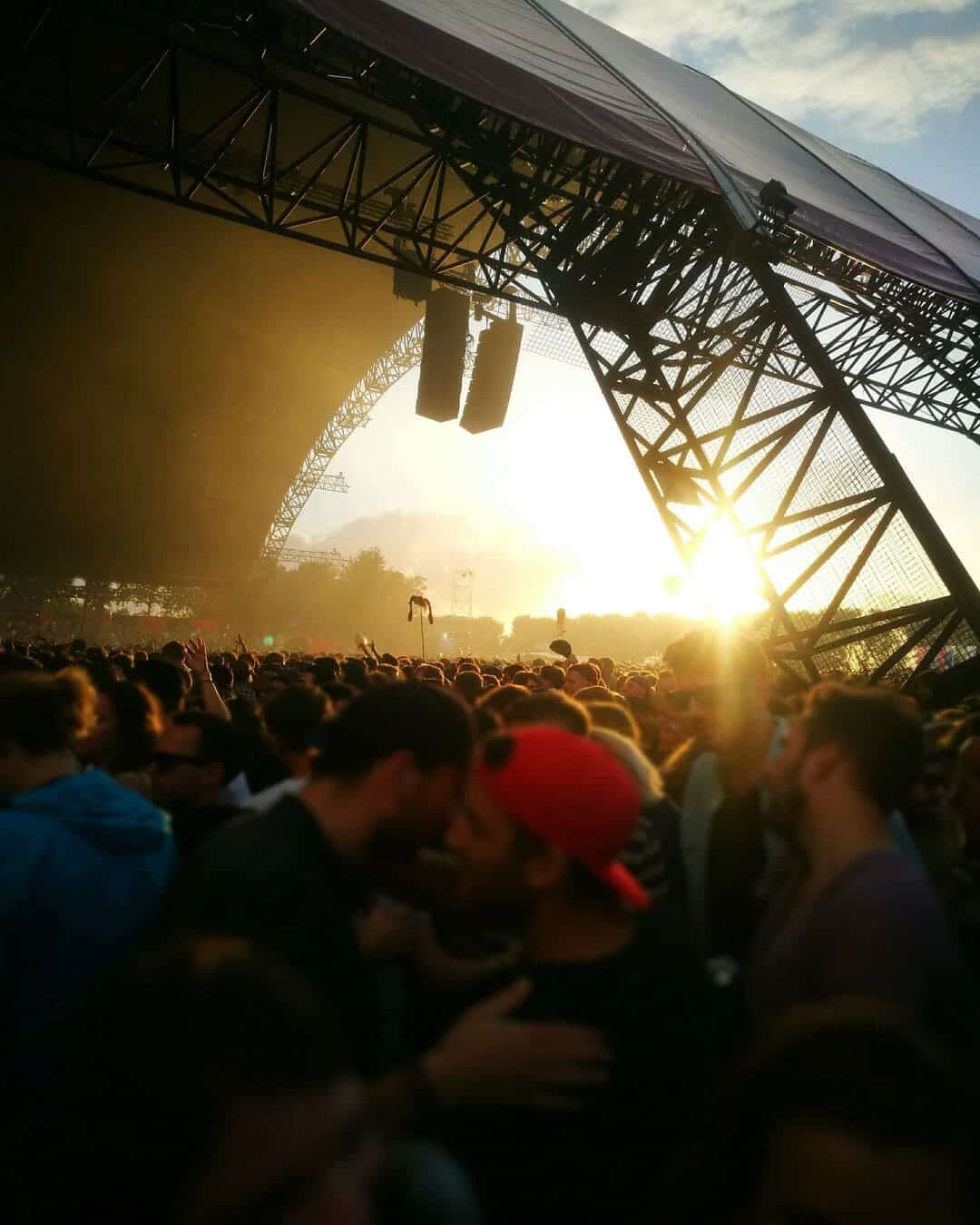
Today Darwin hosts more than 200 organisations: businesses, NGOs, artisans, artists. Here is what you can see and do in one afternoon. The 2,000 square metre indoor skate park, one of the largest free-access parks in Europe, installed in the former technical hangars (often full of skaters who came from all over France). The giant street-art murals wrapping the outer facades, refreshed every year with international artists. Le Magasin Général, a huge organic grocery-restaurant-cafe set up in the officers' mess, with a terrace over the Garonne for Sunday brunch. The urban farm, with vegetable gardens, beehives and hens, run on permaculture principles. The contemporary art gallery and the artist studio. The humanitarian camp, discreet but real, sheltering and supporting people in distress. And a permanent calendar of concerts, exhibitions, organic markets, and zero-waste workshops.
Why it's genuinely unusual
The place blurs every usual category. It is neither municipal nor entirely private. It preaches ecology but also hosts businesses. It combines start-ups and humanitarian work, coworking and rough sleeping, contemporary art and organic grocery. What the barracks stood for at its most rigid (discipline, uniform, hierarchy, closed gates) has flipped into its opposite: radical openness, deliberate mixing, permanent experimentation. In a city often seen as conservative, this makes Darwin uniquely counter-cultural. It is not perfect and regularly faces criticism (funding, management, business model). But it remains, alongside the bunkers of the submarine base, one of the most radical reconversions Bordeaux has produced this century.
How to get there
Darwin is located at 87 quai des Queyries, Bordeaux (right bank). 15 minutes on foot from Place de la Bourse via the Pont de Pierre, 5 minutes by tram (line A, Stalingrad stop, then a short walk), or by bike along the riverside cycle paths. Free access to the site, open every day. Weekend mornings are the best time to feel the full atmosphere.