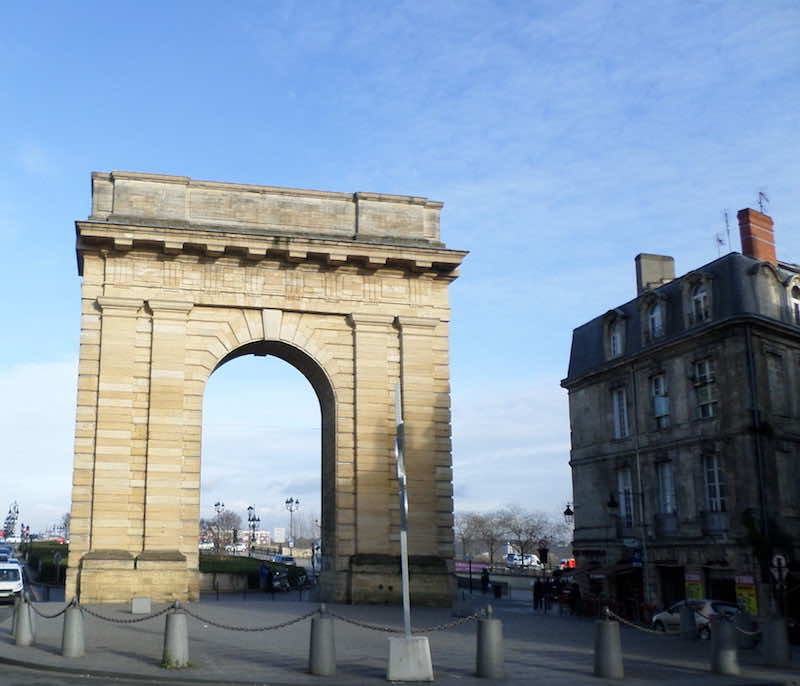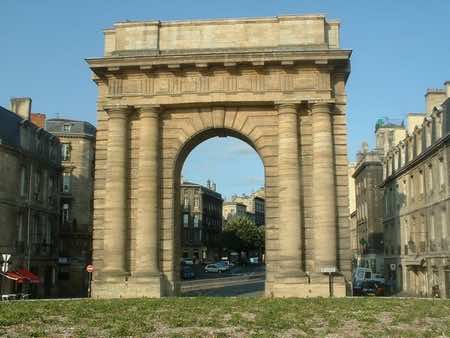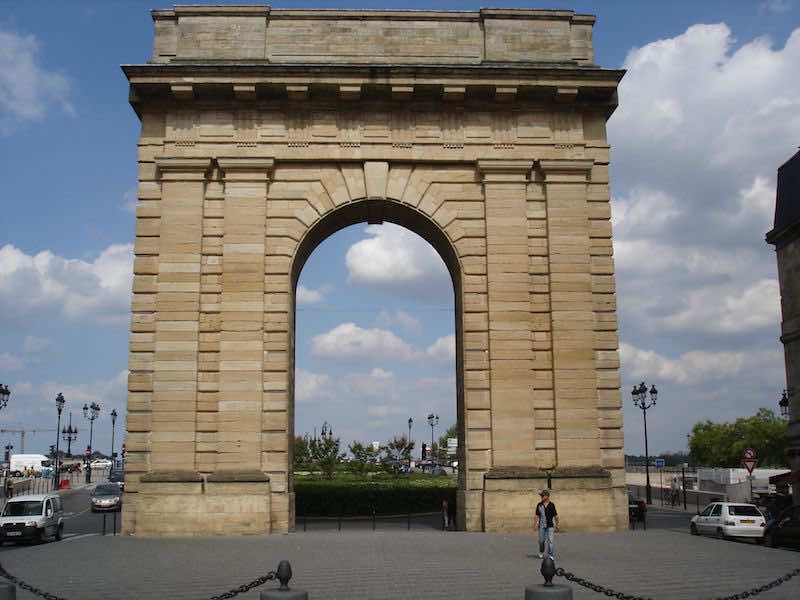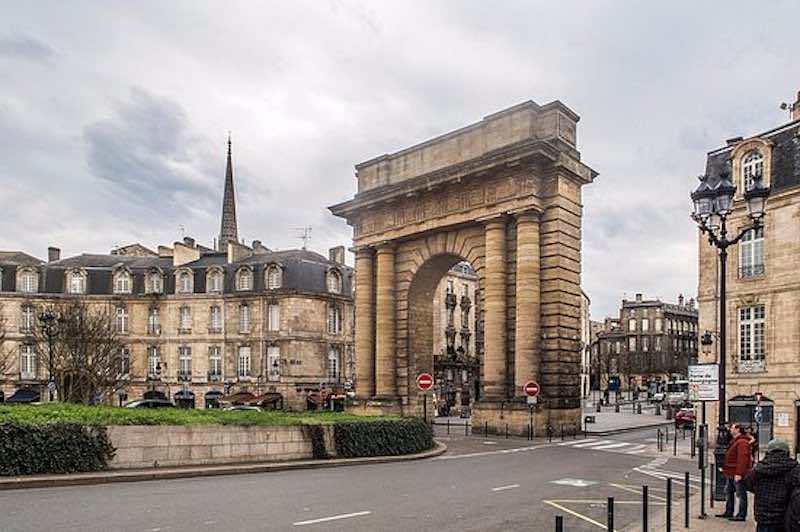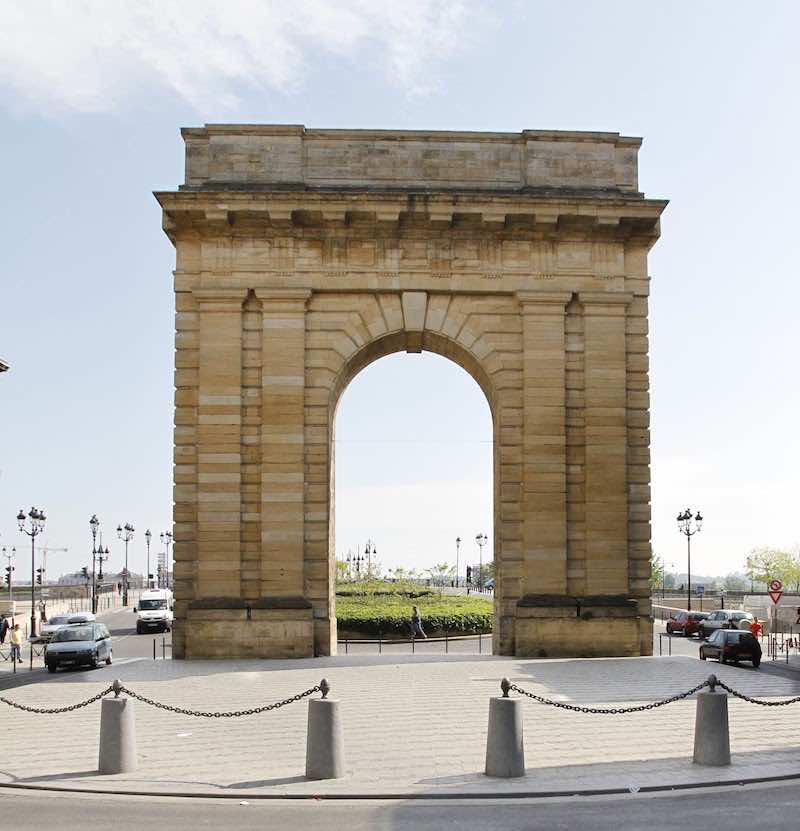
Visiting Bordeaux also means enjoying the symbolic buildings of the "belle endormie".
LA PORTE DE BOURGOGNE is one. This impressive, imposing monument symbolizes entry into the heart of the city. Crossing this gate, you'll walk in Napoleon's footsteps, sailors', merchants', soldiers', but also in the wake of the first electric tram in 1897; in short, laying eyes on the Porte de Bourgogne is a guarantee of time travel and a glimpse of a small piece of our city's history.
La porte de Bourgogne also called: Porte des Salinières. A monument at the end of the former Salinières moats, today's Cours Victor Hugo (formerly rue des Fossés), on the site of the old medieval Salinières Gate. Classed as a historic monument since June 2, 1921. It marks the official entry to the city on the old road to Paris.
The city's intendant, the Marquis de Tourny wanted it to complement the Place Royale (today's Place de la Bourse) and dedicated it to Prince Monseigneur le Duc de Bourgogne on January 24, 1757. It was for a time the Porte Napoléon to celebrate the Emperor's visit to Bordeaux in 1808.
Its classical design echoes that of triumphal arches, like Titus's in Rome, giving the image of a modern 18th-century city. The Porte de Bourgogne's staging includes the half-moon square that announces it. Its build, between 1750 and 1755, is by architect André Portier. The position of the Pont de Pierre, in the extension of the monument, is no coincidence. During its construction, the square in front of the Porte de Bourgogne was raised, sinking the gate as a result.
After this brief intro, I'll let you stand in front of this monument, take a deep breath and walk under its arch. That way you'll have entered a timeless Bordeaux.