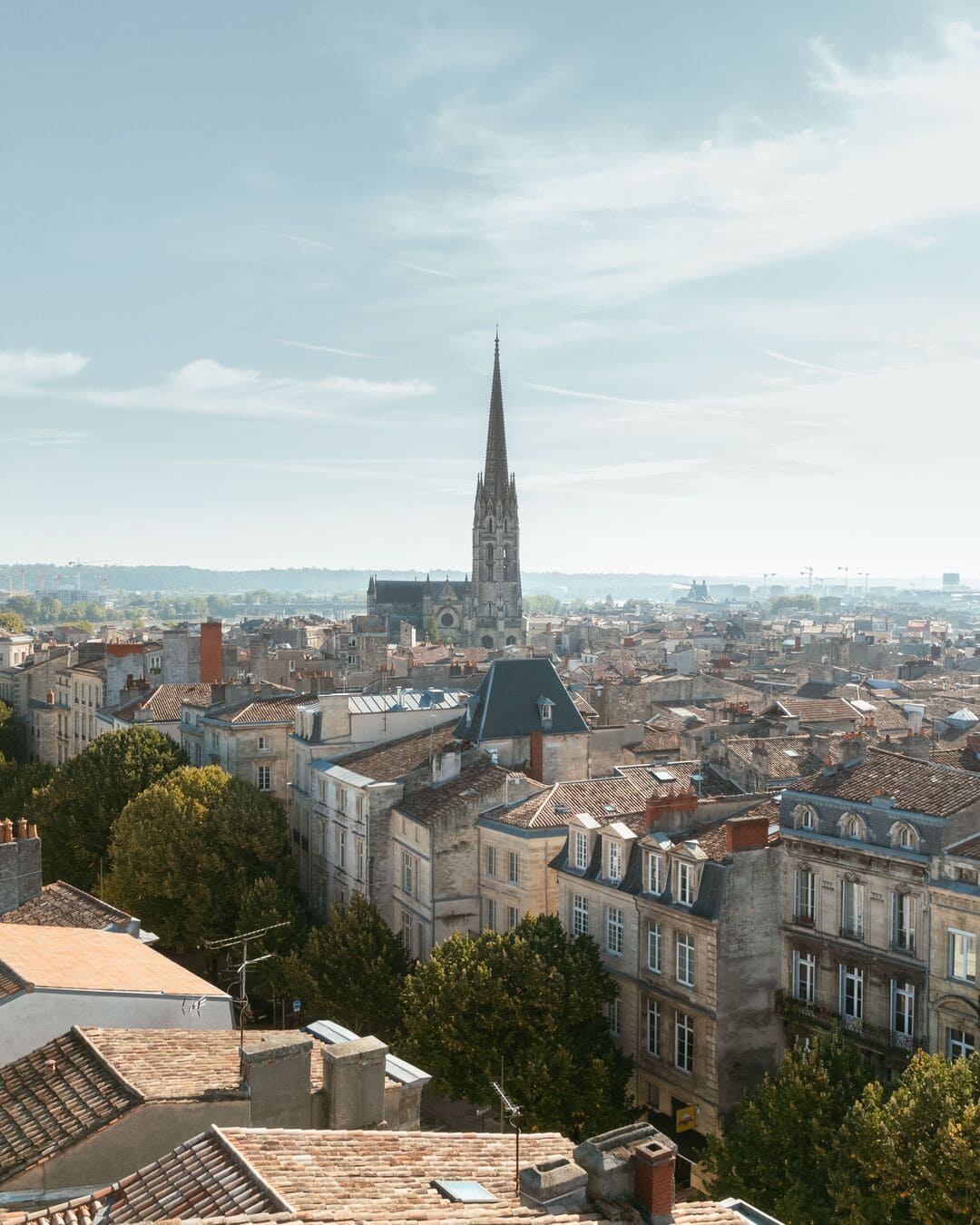
It was in the 13th century that the legend was born in rue du Mirail, then still a discreet passage leading to the Augustinian convent, outside the city walls. The Porte Saint-Éloi (future site of the Grosse Cloche) marked one of the entrances to Bordeaux. At the intersection of today's rue du Mirail, rue des Augustins and rue de Gratiolet stood a well the inhabitants relied on for clean water. This well became a place of mystery: whispers were attributed to it, strange sounds rising from its depths, and soon deaths.
The mythological tale: the basilisk and the mirror
According to the versions, a basilisk, mythological serpent or chimera, had settled in this well. Half water serpent, half creature with rooster attributes (head, crest, wings, feathers), this legendary being killed anyone who met its gaze or came too close to the well trying to catch its whispers. The terrified inhabitants dreamed up a solution: someone returning from crusades in Egypt, knowing the basilisk's secret, went down into the well with a mirror. Seeing its own reflection, the basilisk destroyed itself. After this feat, the well's street took the name « Mirail » or « Mirailh », from the word for mirror, in tribute to this mythical moment.
What are the legendary and mythological origins of the basilisk?
The basilisk is an ancient creature, born from Greco-Roman tales: serpent or little royal serpent (« basilicos » means « little king » in Greek), gifted with a deadly gaze or toxic breath. In the Middle Ages it gained hybrid attributes, linked to the rooster, the dragon, or the Gorgon, mythical mother of the creature.
In the Bordeaux version, the basilisk « immigrated from Touraine » is a local touch: the tale places it far away, gives it the character of a dangerous foreigner, which reinforces its frightening dimension.
Let's talk interpretations and symbolism
- Mirror symbolism: the mirror appears as a weapon of truth, a way to face terror by reflecting the terrifier itself. A powerful idea: evil cannot stand itself, it is defeated by consciousness, by reflection.
- Popular explanatory function: the well being deep, dark and often dangerous for children or the curious, the legend may have been born as a warning, to keep people away.
- Origin of the name « Mirail »: this tale is used to explain the place name: « Mirail(h) » is said to come from « miroir » (mirror), linked to the story of the mirror used to kill the basilisk. Whether or not the etymology is accurate, it shows how much legends shape the urban landscape and collective memory.
The legend of the Mirail well basilisk shows Bordeaux's rare capacity to make the ordinary vibrate, to dig into everyday life to slip in a touch of the marvellous, to blend reality and myth in such a way that every stone, every carved mascaron on a façade, every street name, carries a share of mystery. It also reveals that in this city, as in many others, imagination does not simply tell the past but marks the boundaries between known and unknown, between the fear of the depths and the awakening of the gaze; the legend gives meaning, offers residents a mirror, invites them to look at what sleeps beneath the surface.
Through urban memory, through these visible traces (the Gorgon mask, the very name « Mirailh » or « Mirail » meaning mirror), the city carries its mythical history in its streets, its façades, its names; it is this memory that turns ordinary space into legend country.
This tale still draws in the curious, the thrill-seekers, the lovers of old stories: the basilisk legend is not dead, it echoes on storytelling walks, in the steps of those who wander rue du Mirail, in the haloes of late-night lanterns; this legend is a bridge between generations, a breath that stirs Bordeaux when evening falls, when windows light up, and you feel that, beneath the polished stone and the modern lights, the city keeps its ghosts and its stories to tell.