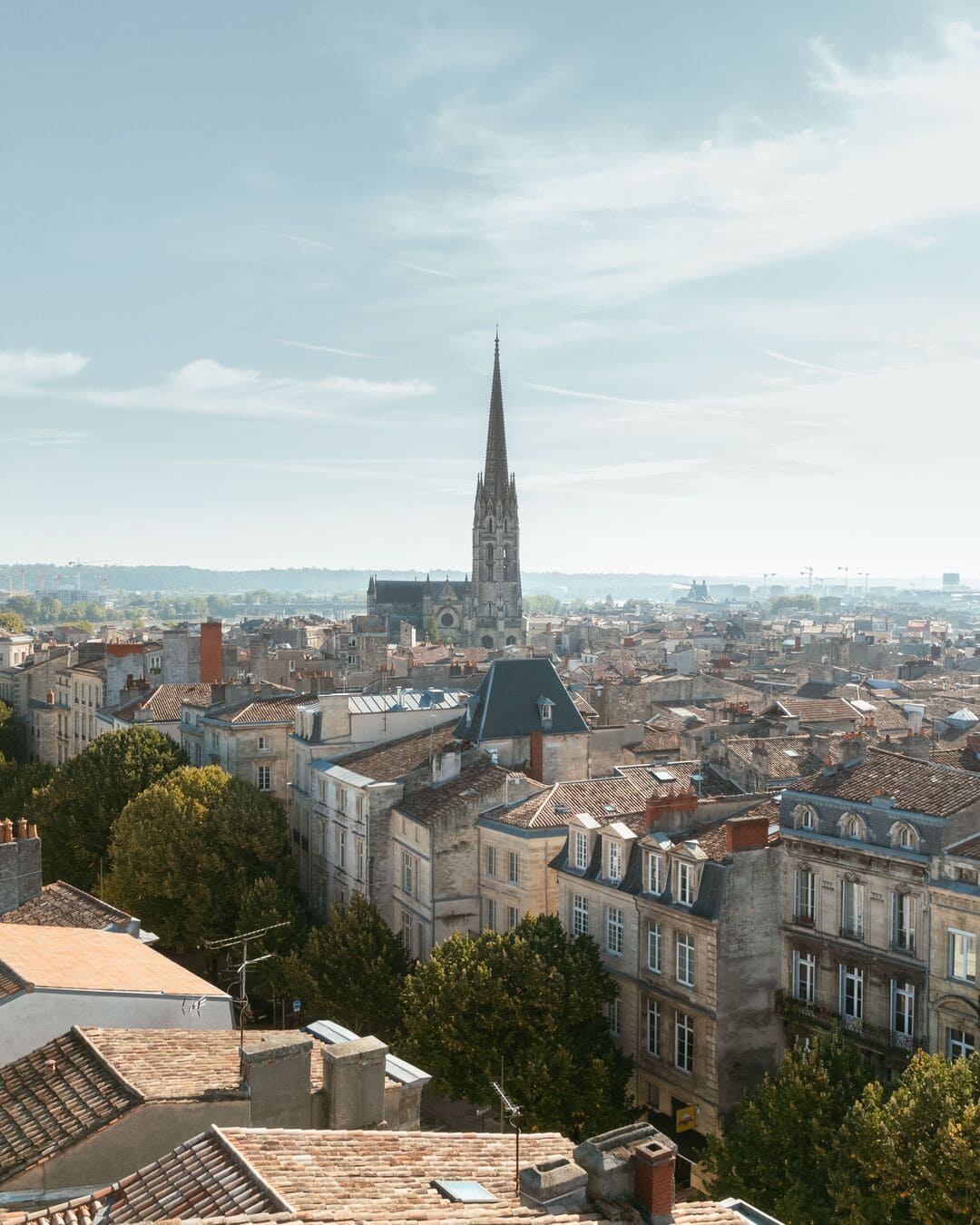
When you wander through Bordeaux, what strikes first is the city's visual unity. That golden, luminous palette, almost honey-toned at sunset… It comes from Bordeaux stone, a material that on its own tells the history and identity of the city.
A stone born from the sea
Bordeaux stone is not just any stone. It is of marine origin, made up of fossilised shells. In other words, every façade you gaze at in the centre is also a fragment of ocean frozen for millions of years. That is what gives it its warm colour, its sometimes uneven texture, and that almost living feel that makes its whole charm.
Many of these stones came from the right bank quarries: Floirac, Lormont, and also Bassens and its surroundings.
👉 Little anecdote: not all stones were the same quality. Bourgeois buildings sourced from quarries known for their solidity and fineness, while more working-class neighbourhoods used softer, sometimes more fragile stones.
Result: Bordeaux stone is also a social marker. Behind a façade, you can guess the ambitions and rank of its patrons.
A city shaped by its stone
If Bordeaux has such a uniform face, it is thanks to this stone. From the 18th century onwards, the great urban projects launched by the intendant Tourny made massive use of this local material.
- The private mansions of the Chartrons.
- The monumental façades along the quays.
- The Pont de Pierre, symbol of the link between the two banks.
Bordeaux stone shaped the city and contributed to its UNESCO listing, so remarkable is its architectural unity.
Bordeaux stone is also a property value argument. Flats or houses with beautiful façades or exposed interior stone walls still attract buyers. It is a mark of authenticity, character and prestige.
Behind a stone wall, there is also a collective memory. Buying, renovating or living in a Bordeaux stone building is literally living inside a piece of history.
Many Bordelais express real pride in this architectural identity. Bordeaux stone is a bit like the skin of the city. But some also regret that modern urbanisation has sometimes hidden or distorted this original beauty.
Either way, every anecdote, every façade, every neighbourhood reminds us that stone is not just a material: it is a living heritage that keeps telling the story of Bordeaux.
Anecdotes and little stories
💡 Many Bordelais don't know that some façades still bear traces of marine fossils embedded in the stone. If you look closely, you can sometimes spot a mollusc shell or a fragment of coral.
💡 Another anecdote: being too soft, the stone has also caused some issues. Some buildings had to be reinforced or restored earlier than planned because of the rock's porosity.
💡 Finally, the stone plays into Bordeaux's poetic nickname: the Port of the Moon. Because in moonlight, these honey-toned façades take on a silvery, almost unreal glow.
Next time you look up at a Bordeaux façade, take a closer look. Behind its golden tones, there are shells, millions of years of history, and a piece of the city's soul.